
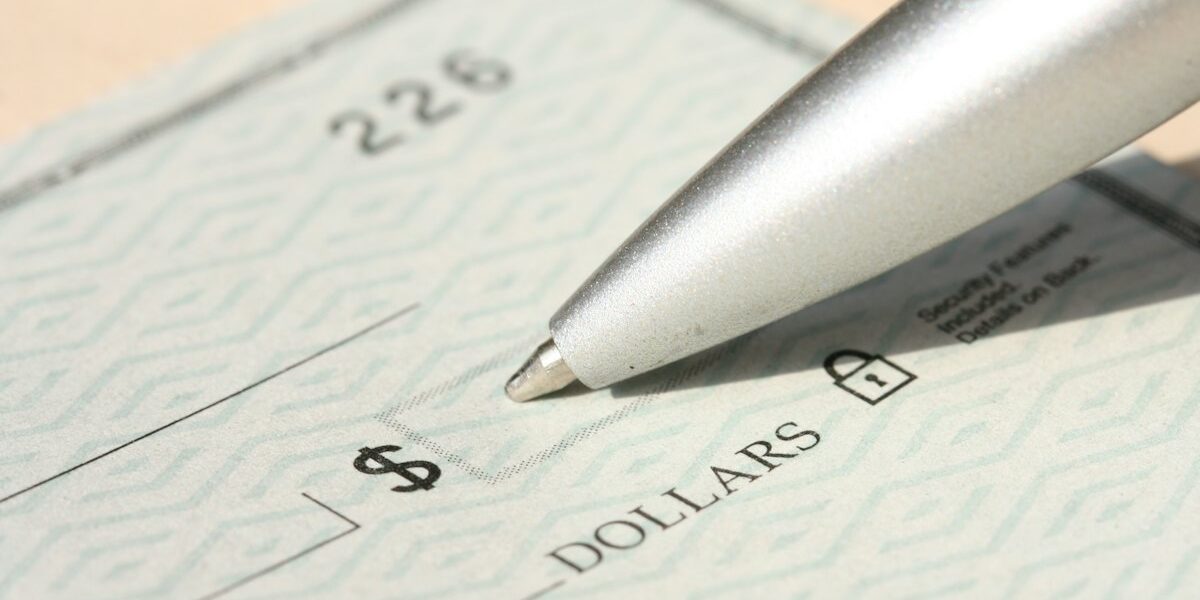
Your earnest money deposit (EMD) is the check you write when your offer gets accepted — and it’s the one real piece of your money that is at risk before closing. If the deal closes, it credits to your down payment or closing costs; if it falls through for a reason your contract protects, it comes back to you; if you walk away without a protected reason, the seller can keep it. The “how much” and “when do you lose it” are both negotiable inside the purchase contract — which is why this post is worth reading before you write the check, not after.
This post walks through how earnest money works nationally, how much to put down in 2026 California and the Orange County market, where the money actually goes, the three contingencies that protect it, and what’s different for VA and FHA buyers.
- How much earnest money to put down (national norm vs. California practice)
- Where the money actually goes (not to the seller)
- The three contingencies that protect your deposit
- When you lose your EMD — and when you don’t
- California’s Civil Code §1675 rule on the 3% presumption
- What’s different for VA and FHA buyers
What Earnest Money Actually Is
Earnest money is a good-faith deposit you include with your offer to purchase a home. It tells the seller you’re serious about closing — serious enough to put real cash on the line. The deposit is almost always held by a neutral third party (an escrow or title company), not by the seller, until the deal closes or falls apart.
When the sale closes, your EMD credits against what you owe at the closing table — either your down payment, your closing costs, or both, depending on how the Closing Disclosure is structured. You don’t pay it twice.
Important distinction: earnest money is not your down payment. The down payment is the full equity you bring to closing. Earnest money is a slice of it that you deliver up front. In Orange County, a buyer putting 20% down on an $800,000 home has a $160,000 down payment; the earnest money might be $16,000 to $24,000 of that, delivered right after the offer is accepted, with the rest wired at closing.
How Much Earnest Money? Nationally vs. California
There is no federal rule on how much to put down. Earnest money is set by the purchase contract. Market norms:
- Nationally: roughly 1% to 3% of the purchase price. On a $400,000 home, that’s $4,000 to $12,000.
- Competitive markets (coastal California, Orange County in 2026): often 2% to 3%, sometimes 5% in a bidding war to make the offer stand out.
- In a slow or cooling market: 1% or even a flat $1,000 is common.
In practice, the deposit amount is a lever you (or your agent) can pull to strengthen an offer. A bigger EMD signals to a seller “I am not going to flake.” It also means more of your cash is at risk if the deal falls through without a protected reason — so bigger is not always better. Right-sizing to the market is the goal.
A concrete California example: $800,000 purchase in Irvine, 20% down ($160,000), roughly 2.5% earnest money = $20,000 EMD delivered to escrow within three business days of the signed offer. The remaining $140,000 gets wired at closing. Both pieces are “your down payment.”
Where the Money Actually Goes
This is the question most first-time buyers get wrong. The seller does not take your earnest money and hold it. Your check (or wire) goes to one of three neutral third parties, named in the purchase contract:
- An escrow company — standard in California and most Western states.
- A title company — standard in many Eastern and Southern states.
- The listing broker’s trust account — less common, but still allowed in some markets.
Whichever holds it, the money sits in a non-interest-bearing trust account separate from the holder’s operating funds. The holder cannot release the money to the seller, the buyer, or either agent without written instructions signed by both parties (or a court order). That protection is why the deposit is called “escrow” — the funds are legally outside either party’s reach until the deal closes or is officially canceled.
At closing, escrow applies the EMD as a credit on your Closing Disclosure. It appears on the “Payments Already Paid” section and reduces the “cash to close” number by the same amount. If you’ve never seen a Closing Disclosure before, review a sample on our savings, reserves, and closing costs guide.
The Three Contingencies That Protect Your Deposit
Most California residential purchase contracts (like the standard CAR RPA form) include three contingencies that let you cancel the contract and get your earnest money back, without penalty, if specific things go wrong. These are the ones that matter for your deposit:
1. The loan contingency. If your lender denies your loan during underwriting, or if you can’t secure financing on the terms specified in the contract, you can cancel and recover your EMD. Default on CAR forms is 17 or 21 days from acceptance; it is negotiable. See our pre-approval guide for how a strong pre-approval or TBD underwriting commitment shortens this contingency and strengthens your offer.
2. The appraisal contingency. If the appraisal comes in below the purchase price and the seller won’t renegotiate, you can cancel. Default on CAR forms is 17 days from acceptance. In Orange County at today’s prices, this contingency is especially important: lenders will not loan more than the appraised value, so a low appraisal either forces a price reduction or cash-to-bridge from the buyer.
3. The inspection contingency. If a licensed home inspector finds significant defects and the seller won’t fix or credit, you can cancel. Default on CAR forms is 17 days.
Under the standard CAR purchase agreement, contingencies stay in place until you remove them in writing. After you sign a contingency-removal form, your EMD is effectively at risk if you back out for reasons other than the seller’s breach. If the listed period ends and you haven’t removed contingencies, the seller can usually serve a Notice to Buyer to Perform — which is not an automatic forfeiture. That’s why your agent should never rush you through a contingency-removal form.
When You Actually Lose Your Earnest Money
Your deposit is at risk in a narrow set of cases:
- You remove all contingencies and then back out without a seller breach. Classic “buyer’s remorse” after the contingencies have expired.
- You remove contingencies (or don’t respond to a seller’s Notice to Buyer to Perform) and then back out without a protected reason. At that point the deposit is at risk under the contract.
- You discover a financing problem too late. If you remove the loan contingency and then the lender denies you, your EMD is at risk. This is the single biggest reason to understand the difference between a pre-qualification, a pre-approval, and a TBD underwriting commitment before you make an offer.
- You misrepresent material facts in the purchase contract. Fraud or deliberate misstatement can void your protections.
Your deposit is not at risk if:
- The seller breaches the contract (doesn’t deliver clean title, fails to meet their contractual obligations)
- Your appraisal comes in low during the contingency period and the seller won’t negotiate
- You cancel during the inspection contingency period due to legitimate defects
- Your financing falls through during the loan contingency period
- The deal is mutually canceled by both parties in writing
California’s 3% Rule: Civil Code §1675
California has a specific statute that governs how much of an earnest money deposit a seller can legally keep if the buyer breaches. California Civil Code §1675 sets a presumption:
- If the liquidated damages amount is 3% or less of the purchase price, the clause is presumed valid, unless the buyer can prove the amount is unreasonable.
- If the amount is more than 3%, the clause is presumed invalid, unless the seller can prove the amount is reasonable.
This applies to “residential property” as defined by the code: real property consisting of a dwelling with no more than four units that the buyer intends to live in. The threshold applies at the time the contract is signed. (Source: California Civil Code §1675.)
The companion statute, §1677, requires the liquidated damages clause to be separately signed or initialed by both parties, and formatted in bold 10-point type (or red 8-point bold). This is why your CAR RPA has those specific separately-initialed paragraphs on the liquidated damages page.
Practical read: on a $800,000 California purchase, a seller trying to keep more than $24,000 in liquidated damages ($800,000 × 3%) has to defend the amount as reasonable — often in mediation or arbitration, since CAR contracts typically require those steps before litigation. Below $24,000, the seller has a legal presumption in their favor if you truly breached.
VA Loan Earnest Money: What’s Different
The Department of Veterans Affairs does not require an EMD. The amount, if any, is set by the purchase contract between the buyer and seller.
Three practical points for VA buyers:
- The VA Escape Clause. Every VA loan purchase contract must include a VA-specific appraisal escape clause: if the VA appraisal comes in below the purchase price, the buyer can cancel and recover the full EMD without being obligated to complete the purchase at a higher price than the appraised value. This is federal regulation, not negotiable, and it is the VA buyer’s strongest protection.
- Source of funds. Your lender will verify where the EMD came from. Many VA lenders require the deposit itself to come from your own funds (not a loan). Properly documented gift funds are generally allowed for closing costs, so confirm with your lender before you write the check.
- Zero down doesn’t mean zero cash. VA loans don’t require a down payment and don’t require an earnest money deposit, though your purchase contract may still call for one, and you should plan for closing costs. If you don’t have the cash on hand, we can help structure a seller-credit arrangement that minimizes your out-of-pocket — see our VA loans page.
FHA Loan Earnest Money: What’s Different
FHA, like VA, does not mandate an earnest money amount. Standard market norms apply (1% to 3%). What FHA does require:
- Source documentation. If your EMD exceeds 1% of the purchase price (or looks large compared with your savings history), FHA requires documentation of the source. Bank statements from the two months prior to the deposit typically satisfy this.
- Clean deposit trail. Large recent deposits into the account you’re pulling from can trigger a sourcing request. If you deposited cash from a non-payroll source into your account within 60 days of the EMD check, be ready to explain it.
- FHA amendatory clause. Similar to the VA escape clause, FHA purchase contracts include an amendatory clause that protects the buyer if the FHA appraisal comes in below the purchase price. The buyer can cancel and recover the EMD without penalty.
Timing: When Do You Write the Check?
California CAR contracts typically require the EMD to be delivered to escrow within three business days of offer acceptance. Some contracts call for same-day delivery or 24 hours. Your purchase contract spells it out.
Form of payment: a personal check is common, though in a competitive market you may be asked for a cashier’s check or wire. For wires, double-check the routing and account numbers with escrow directly by phone — wire-fraud scams on real estate transactions are a known problem. The FBI’s Internet Crime Complaint Center consistently flags real-estate wire fraud as one of the top loss categories. Never trust a wire-instruction email that was sent to you without voice-confirming the account details with escrow using a phone number you looked up independently.
What If You Put a Low EMD In?
Low earnest money can cost you the deal. In a competitive market, sellers compare offers partly on buyer commitment signals; a 1% EMD against a competing 3% EMD may look weaker on paper even if your purchase price is identical. That said, in a cooling market or a longer-marketed property, a lower EMD is usually fine.
If you’re uncertain about your readiness to close — employment just started, you’re waiting on gift funds, you expect appraisal volatility — a lower EMD limits downside without changing your bid. We walk through this with every buyer we work with; call us at (877) 870-0007.
Representative loan example
Frequently Asked Questions
How much earnest money should I put down in Orange County?
Market-dependent. In Irvine and Orange County in 2026, most accepted offers run 2% to 3% of the purchase price. On an $800,000 home that’s $16,000 to $24,000. In a bidding war, 5% is not unusual. On a longer-marketed property or in a cooler sub-market, 1% is fine.
Is earnest money refundable?
Yes, as long as you cancel inside a contingency period (loan, appraisal, or inspection) or the seller breaches. Once contingencies are removed and you back out without a protected reason, the EMD is at risk under the liquidated damages clause.
Who holds my earnest money?
A neutral third party named in the purchase contract. In California, this is almost always an escrow company. In other states it may be a title company or the listing broker’s trust account. The holder cannot release the funds to either party without signed instructions from both buyer and seller (or a court order).
Does the earnest money count toward my down payment?
Yes. At closing, the EMD is applied as a credit on your Closing Disclosure, reducing the cash you owe at the closing table by the same amount. You don’t pay for it twice.
Can the seller keep more than 3% of the purchase price in California?
Not easily. California Civil Code §1675 presumes a liquidated damages amount of more than 3% to be invalid unless the seller proves it’s reasonable. For a residential dwelling with up to four units that the buyer intended to occupy, the 3% ceiling is the practical safe harbor.
Do I need earnest money for a VA loan?
Only if the purchase contract requires it. The VA does not mandate an EMD. If the contract calls for one, the VA escape clause gives you strong appraisal-based protection, and your lender will verify the source of funds.
What happens if the appraisal comes in low?
If the appraisal is below the purchase price, your appraisal contingency (or the VA escape clause / FHA amendatory clause on a government loan) lets you either renegotiate the price with the seller or cancel the contract and recover your EMD. If you’ve already removed the appraisal contingency, you’re exposed — you’ll need to bring the difference in cash or walk away and lose the deposit.
Writing an offer this week?
We’ll walk through earnest money sizing, contingency timelines, the appraisal and loan contingency windows, and the wire-fraud protocol with your escrow — before you sign.
OnPoint Mortgage Pro NMLS #2134550 • Victor Santos NMLS #888844 • Irvine mortgage broker • Licensed in CA, CO, FL, ID, MD, NH, SC, TX, VA • Equal Housing Opportunity